
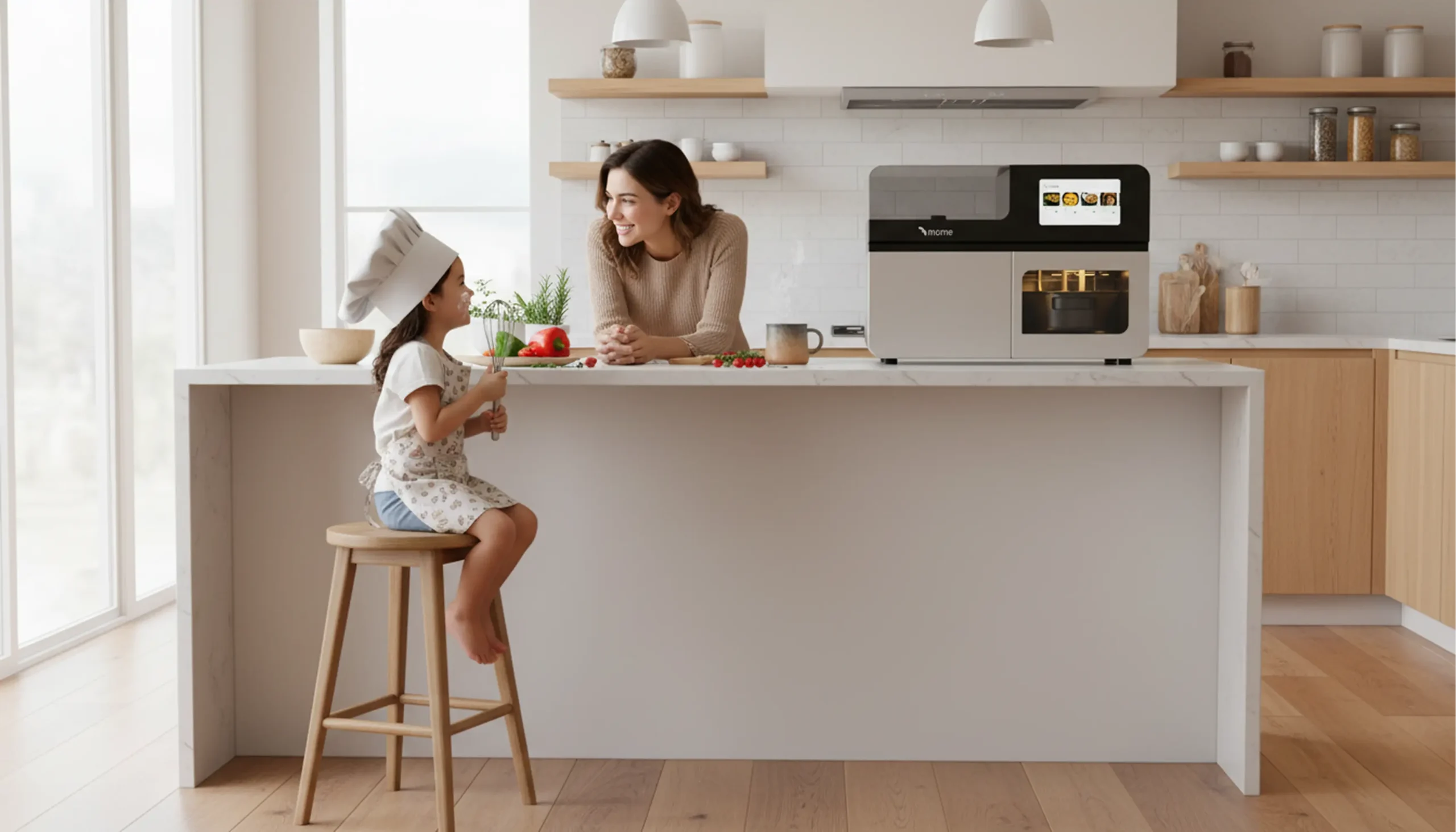
Your guide to understanding how cooking robots actually work and why one belongs in your kitchen
Why Cooking Feels Like A Task
Here’s a scene that plays out in millions of homes every day:
You walk through the door at 6:45 PM. Your body is tired, your mind is still processing work emails, and your stomach started growling an hour ago. The refrigerator is full of ingredients you bought on Sunday with the best intentions. But right now, the thought of spending 45 minutes chopping, stirring, and monitoring a hot stove feels impossible.
So you grab your phone and order delivery. Again. The food arrives lukewarm, costs more than it should, and leaves you feeling vaguely guilty. You tell yourself tomorrow will be different.
Sound familiar?
This isn’t a personal failure. It’s a design problem. Modern life demands more hours than cooking was designed for. Work schedules stretch longer. Commutes eat into evenings. Energy runs out before dinner begins. The result? People who genuinely want to eat nourishing home-cooked meals end up dependent on takeout, frozen food, and whatever that provides quick gratification.
This is exactly where, MOME – your smart kitchen robot, steps in.
What Is a Kitchen Robot, Really?
A kitchen robot is a smart cooking appliance that handles the actual cooking process stirring, heating, timing, temperature control while you handle the simpler task of prepping ingredients.
Think of it this way: you do 10-15 minutes of chopping and loading. The machine does 25-35 minutes of skilled cooking. You come back to a finished meal.
You’ll see these devices called different names depending on where you look. Some brands market them as cooking robots, emphasizing the automation. You might also encounter kitchen robot chef, robot cooking machine, or food cooking robot. The terminology varies by manufacturer, but the core function remains the same, automating the part of cooking that requires constant attention so you can step away and live your life.
This isn’t about replacing cooking entirely. It’s about removing the burden of standing, watching, stirring, adjusting, worrying that makes weeknight cooking feel exhausting.
The Real Problems MOME Solves
Let’s get specific about what’s actually broken in daily cooking:
The time trap. Traditional cooking demands continuous attention. You can’t start dinner and then help your kid with homework. You can’t begin a recipe and then take a work call. The stove requires babysitting, and that’s time most people don’t have on a Tuesday evening.
The skill gap. Curries that need layered spices. Stir-fries that require precise heat timing. Sauces that separate if you look away. These dishes intimidate home cooks because they demand technique that takes years to develop. Most people stick to five “safe” recipes and never expand. MOME eliminates this barrier the machine handles technique while you handle simple prep.
The exhaustion factor. Cooking isn’t just physical labor, it’s decision-making. What to make? What ingredients do I have? What’s the right temperature? When is it done? After a mentally draining day, this cognitive load feels overwhelming. Ordering food requires exactly one decision: what do I want?
The health compromise. Restaurant food and takeout taste good however, eating out regularly means consuming ingredients you’d never choose if you were cooking yourself.
A food cooking robot addresses all four problems simultaneously. It handles the attention. It manages the technique. It removes the decisions. And it lets you control exactly what goes into your food.
How a Robot Cooking Machine Actually Works
The process is simpler than most people expect:
You select a recipe from the machine’s library most quality kitchen robots offer 200+ options across cuisines. The screen walks you through exactly what to prep: chop this vegetable into cubes, measure this amount of protein, gather these spices.
You load everything into the cooking chamber. Advanced machines have automated dispensers that add oil, water, and seasonings in precise amounts at the right moments. Basic models require you to add these manually when prompted.
You press start and walk away.
The robot cooking machine takes over from here: heating to exact temperatures, stirring at appropriate speeds for each cooking phase, timing every stage automatically. Some models adjust technique mid-recipe: slower stirring for delicate sauces, faster agitation for stir-fries that need high heat distribution.
When cooking finishes, you get an alert. Dinner is ready.
What you still do: Choose recipes. Chop ingredients. Load the machine. Clean up afterward.
What you don’t do: Stand at the stove. Monitor constantly. Adjust heat. Worry about burning. Stir endlessly.
This division of labor is the key insight. A kitchen robot chef doesn’t eliminate your involvement, it eliminates your imprisonment at the stove.
Who Benefits Most From a Kitchen Robot?
Here’s an honest breakdown:
Busy professionals get the clearest benefit. If your evenings are short and your energy is depleted, cooking robots transform dinner from a 45-minute obligation into a 12-minute task with 30 minutes of freedom in the middle.
Working parents face an impossible juggling act: career demands, children’s needs, household management, and somehow putting healthy food on the table. A food cooking robot returns time to the family. You can supervise homework or handle bath time while dinner cooks itself.
Students and beginners often default to fast food because cooking feels intimidating. A robot chef removes the skill barrier entirely. You follow simple prep instructions; the machine handles technique. This builds confidence and establishes healthier habits early.
Health-conscious individuals who want control over ingredients but lack time for daily cooking find kitchen robots especially valuable. You choose exactly what goes in. No hidden oils, excess sodium, or mystery additives.
People who find cooking stressful rather than relaxing benefit enormously. If standing at a stove feels like a chore rather than a joy, automation makes sense.
Who probably doesn’t need one: People who genuinely enjoy hands-on cooking as a hobby. Those who primarily bake (kitchen robots focus on stovetop-style cooking). Anyone with severely limited counter space or a very tight budget.
Addressing the Skepticism
Smart buyers ask hard questions. Here are honest answers:
“Isn’t this just another gadget that’ll collect dust?”
The difference is frequency of use. A spiralizer sits unused because you make zucchini noodles twice a year. A kitchen robot chef addresses something you do daily for dinner. If you cook (or want to cook) regularly, the usage case is built in.
“Can robot-cooked food actually taste good?”
For everyday meals, yes. Why? Because the machine nails the fundamentals: consistent temperature, proper timing, appropriate stirring. A robot cooking machine won’t give you Michelin-star creativity, but it will deliver reliably good weeknight dinners.
“Is it complicated to use?”
Modern cooking robots are designed for simplicity. Select recipe, follow prep prompts, load ingredients, press start. If you can follow a basic checklist, you can operate one without confusion.
“Is it worth the investment?”
A quality kitchen robot costs $1000-$1500. If it helps you cook at home four extra times weekly instead of ordering $35 in takeout, you save roughly $140/week. The device pays for itself in about three months. The health benefits and time savings are additional returns.
Why MOME Is Built for This Moment
MOME was designed around one core insight: people don’t hate cooking, they hate the time and attention cooking demands after exhausting days.
Unlike basic food cooking robots that still require constant measuring and monitoring, MOME focuses on true automation for practical daily use. Automated dispensers handle oil, water, and spices precisely, no measuring cups, no guessing. An adaptive stirring mechanism adjusts speed and motion based on what each recipe requires. A clear touchscreen guides you through prep without confusion.
With 250+ recipes spanning global cuisines from Indian curries to Italian pastas to Asian stir-fries MOME handles real weeknight variety, not just demo dishes.
Every component prioritizes easy cleaning. Modular parts detach quickly. Surfaces wipe clean. Because any robot chef you avoid using due to cleanup hassle becomes worthless.
MOME is currently in pre-launch, with early waitlist members receiving priority access and special pricing.
The Bottom Line
Cooking shouldn’t require choosing between your health and your sanity.
A kitchen robot solves a genuine problem: the time-and-attention cost that makes home cooking feel impossible for busy people. It doesn’t replace cooking, it removes the parts that drain you.
For anyone stuck in the cycle of wanting to eat better but defaulting to takeout out of exhaustion, a kitchen robot chef offers a real way out. Not through willpower or cooking classes, but through smarter design that fits actual modern life.
The future of home cooking is automated, personalized, and accessible. MOME is built to lead that shift.
Frequently Asked Questions
Modern kitchen robots include multiple safety features: automatic shutoff, secure lids, temperature limiters, and child-lock functions. The cooking chamber stays sealed during operation.
Most users report spending 10-15 minutes on prep versus 45-60 minutes for traditional cooking. The 30-45 minutes saved is truly free time you’re not monitoring anything while the robot cooking machine handles the work.
No. A food cooking robot excels at stovetop-style dishes: curries, stir-fries, pastas, soups, sauces, and rice dishes. It doesn’t bake, grill, or deep fry. Think of it as handling 70% of weeknight dinner needs.
Well-designed cooking robots have removable, dishwasher-safe parts. MOME’s modular design allows most users to complete cleanup in under five minutes.